Understanding and optimizing the mandatory primary column in your Smartsheet grid.
USM Content

It’s a required column in every Smartsheet sheet. It serves as the unique identifier for each row. You can't delete it from your sheet. The primary column type is always Text/Number. All other types (including Auto-number) are unavailable.
Why it matters?
- Improves visibility in other views:
- In Card and Board View, the primary column value becomes the card title.
- In Calendar View, it becomes the calendar entry title.
- Hierarchy: If you indent rows for subtasks, the primary column clearly shows the hierarchy.
- Communication: When using Send Row or Request Update, the primary column is the first thing the recipient sees.
- Context: A descriptive name ensures the recipient immediately knows which specific record requires their attention.
How to create a primary column?
It is automatically added as the left-most column in Grid or Table View when you create a new sheet and
When you create a new sheet by importing data from another program, you can designate the primary column. Double-select the column name to rename the primary column and type a new name.
Once you set a primary column, you can’t change it. You can only change its name.
Best practices
- Use descriptive names: Avoid generic titles like "Name" or "Title." Instead, use a specific identifier that clearly indicates what the row represents. For example, use "Project Name" instead of "Name"
- When using forms, if the primary column isn't meaningful in the form's context, hide it. But, be aware it is populated on submission.
Primary column in reports
Because reports can return data from multiple sheets, each having a different primary column name, information from the primary column consolidates into a single column named Primary.
Reports don't display hierarchy.
Note that reports show live data from the source sheet. Any edits made in a report (including deletions) are written directly back to the source sheet.
Primary columns in forms
When you create a new form, the primary column is automatically pulled from the sheet. You can:
You can rename the primary column from the form. Note, it's the only primary column property you can change.
When you create a new form, the primary column gets pulled from the intake sheet. You can add a new column with any column type that you need.
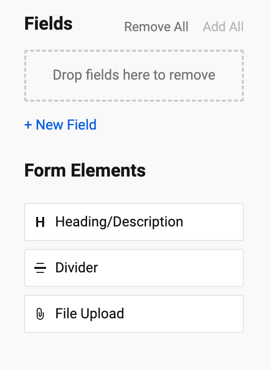
- If you don’t want to use the primary column in your form, you can deselect it from the Fields panel or delete it from your form canvas.
Can I add a primary column to an existing sheet?
No. You can’t add a second primary column or convert a different column into the primary column after a sheet is created. However, if you need to replace the contents of the primary column:
- Insert a new column next to the primary column.
- Select and cut the primary column's content.
- Paste that content into the new column (this preserves the original values).
- Enter your preferred new content into the now-empty primary column.
Can I change the primary column type?
No. The primary column type is always Text/Number. All other column types, including Auto-number, are unavailable for the primary column.
How do I recover cell data from my primary column?
If you deleted or cleared values from the primary column in a sheet, check your sheet's activity log or use Ctrl+Z / Cmd+Z immediately to undo.
- Open the sheet.
- Use Ctrl+Z / Cmd+Z to undo if the action was recent.
- If undo is no longer available, check if your sheet has a backup via the sheet's Activity Log or your workspace's version history.
If you frequently edit data through reports, consider locking the primary column in the source sheet to prevent accidental edits. Owners and Admins can do this under column properties.