Learn how to build a row report in table view.
USM Content
With a row report, you can:
- Combine information from multiple sheets into a single report.
- Create filters and groups for relevant information in a sheet.
- Restrict users to editing only the important columns or rows.

If you need to add multiple sheet summaries into one report, create a sheet summary report.
Create a row report
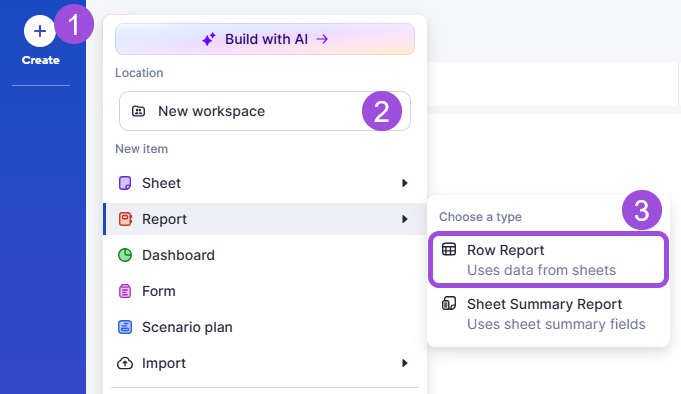
- Select +Create at the top of the left navigation bar.
- Use the Location dropdown to select a destination workspace or folder. For example, select New workspace to create the report in a new workspace.
- Under New item, select Report and choose the Row Report type.
Select source sheets
Source sheets are the sheets you want to pull data from for the row report. Choose Select sheets or go to Source data > Select sheets in the toolbar to pick your source sheets.
The Pro plan allows for only 1 source sheet per report. In other plans, you can have up to 30,000 source sheets per report.
You can select a report’s source sheets individually or by selecting their workspaces. By default, your current workspace is selected. All sheets in a selected workspace are source sheets. If any sheets are added to the workspace, they automatically become source sheets.
If you unselect any sheet from a selected workspace, Smartsheet unselects the workspace, and new sheets added to the workspace don’t automatically become source sheets.
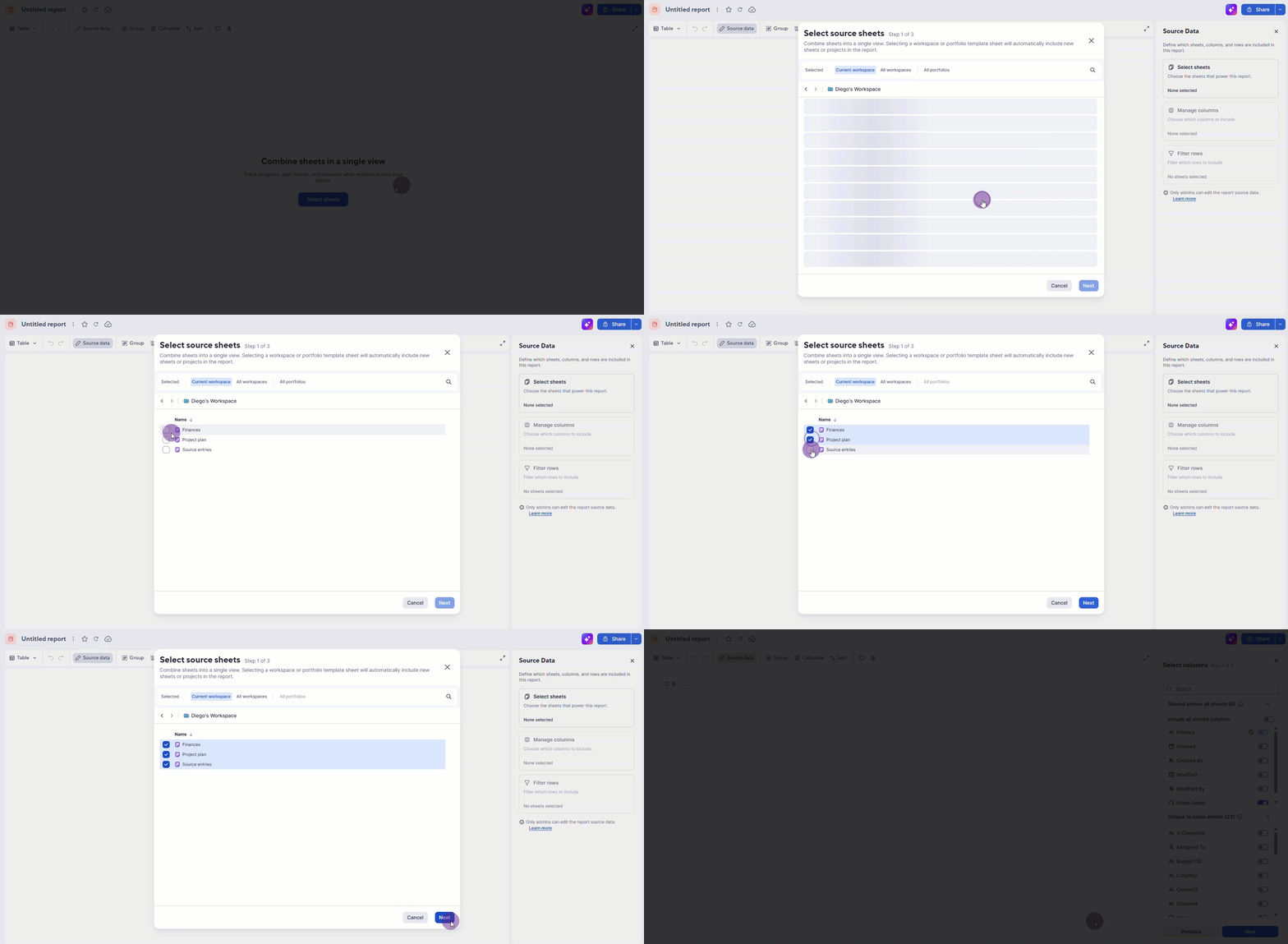
Learn more about working with source sheets in reports.
Manage displayed columns
Select the columns from your source sheets that you want to add to your report. You can have up to 400 columns selected.
To manage your displayed columns in table view:
- Go to Source data in the toolbar and select Manage columns in the panel.
- Toggle on the columns you wish to display. You can use the Search bar to quickly find columns to display in your report. As you toggle columns on or off, the report will update automatically.
Smartsheet identifies columns shared across all selected sheets; use the Include all shared columns toggle to quickly add common sheets to your report.
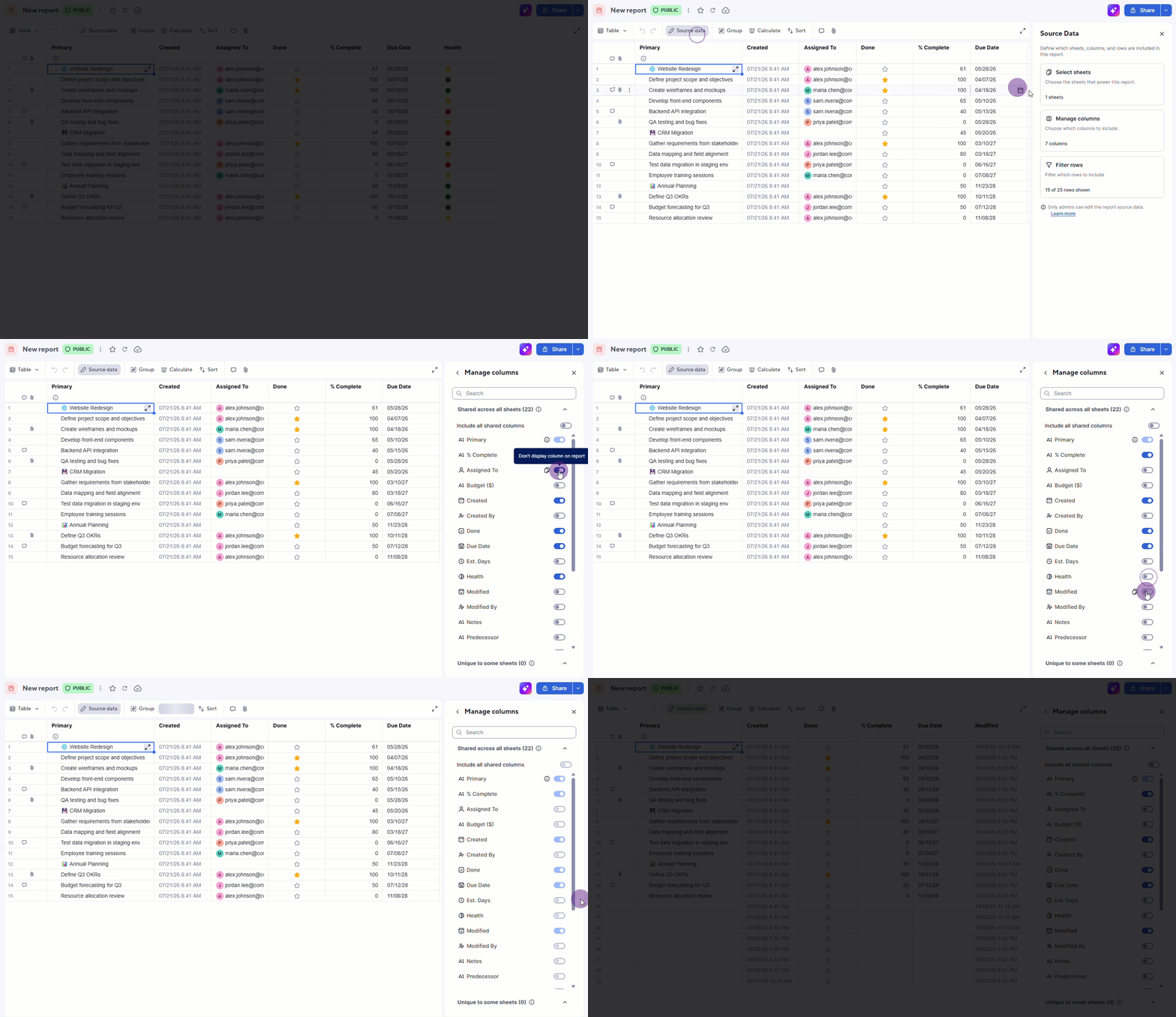
To manage your displayed columns in grid view, select the Columns option in the toolbar at the top of the report. Learn more about selecting the columns included in a report.
Filter your report data
Filters narrow the data pulled into your report from source sheets. Only the data that meets your filtering criteria is displayed in the report.
To add a filter in a table view report:
- Go to Source data in the toolbar and select Filter rows in the panel.
- Select Add filter.
- Fill in your filter group criteria. You can add multiple filters and conditions to display only the rows that match your exact filtering criteria. Learn more about filtering in reports.
The Source data > Filter rows card in the panel displays a counter of how many rows are shown after filters are applied. If you're working with large amounts of data, consider applying additional filters to the report.
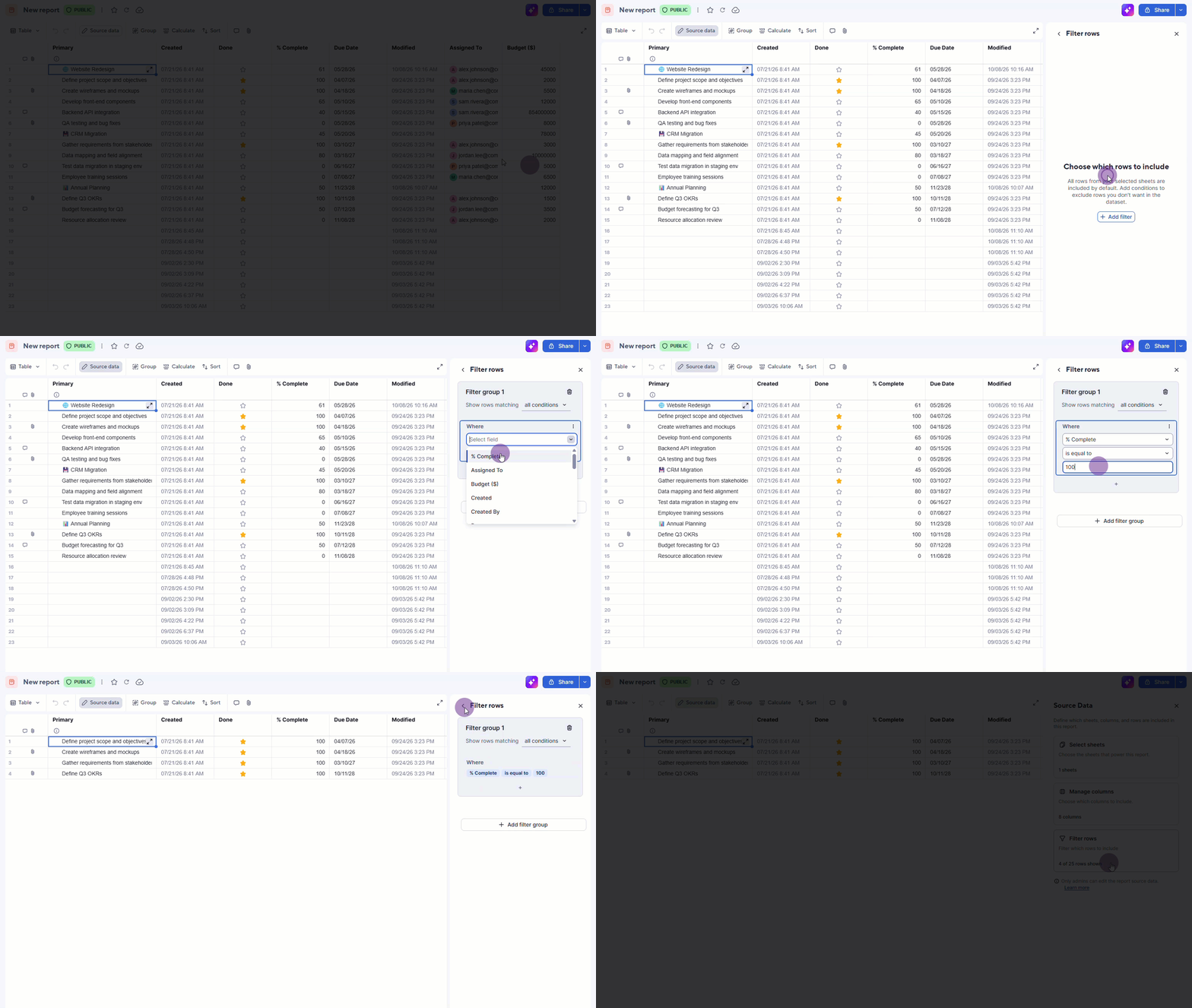
To add filters in grid view, select Filters in the toolbar at the top of the report.
Group data in your report
Organize your data into groups that make it easy for you to access the information you need.
To group your data in a report:
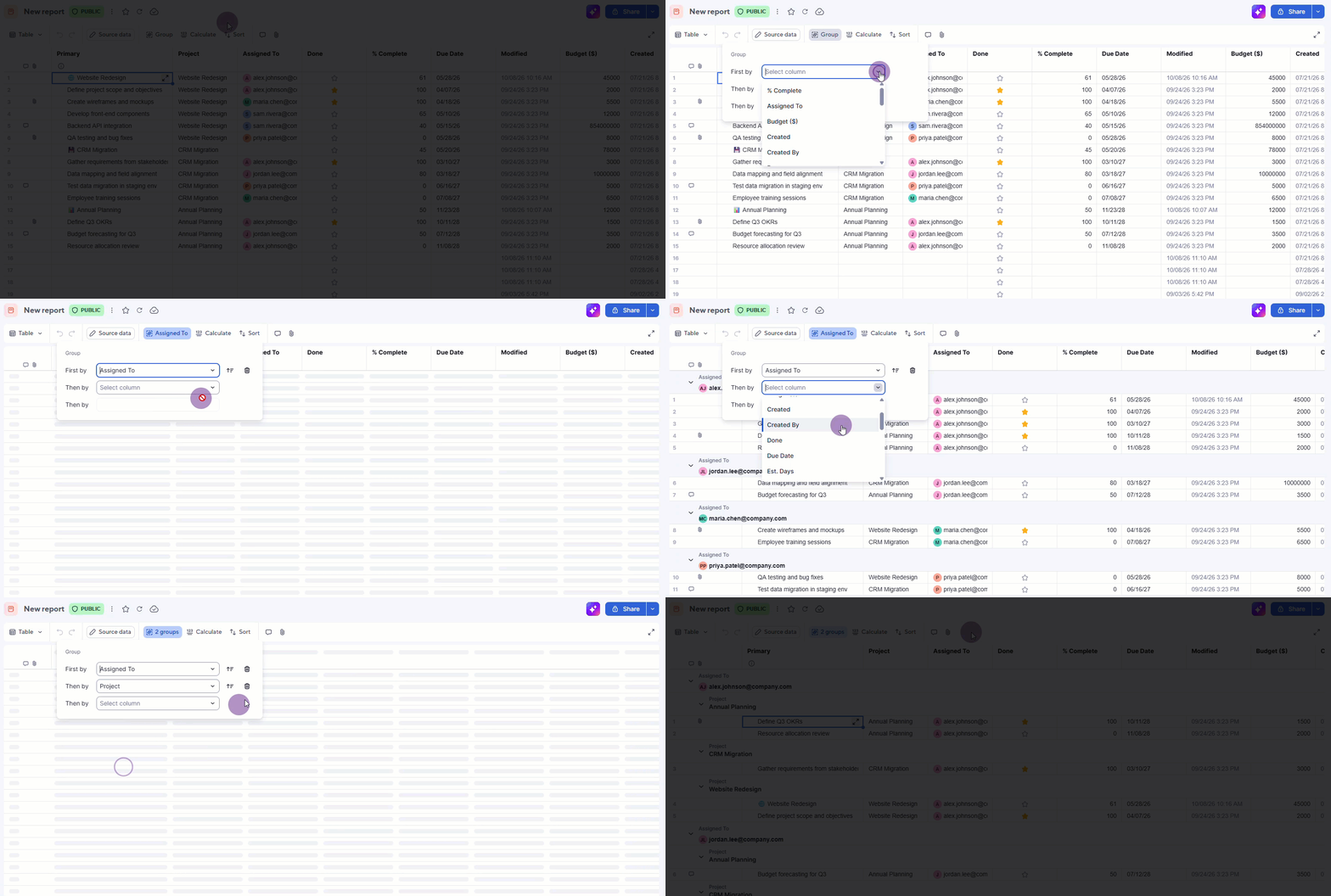
- Select Group in the toolbar at the top of the report.
- Set your grouping criteria. You can set up to three levels of grouping.
You can apply ascending or descending sorting to each grouping level. Learn more about grouping in reports.
Summarize report data
Apply calculations to your column data to highlight counts, averages, and more to inform your decisions.
To add a calculation summary row to your report:
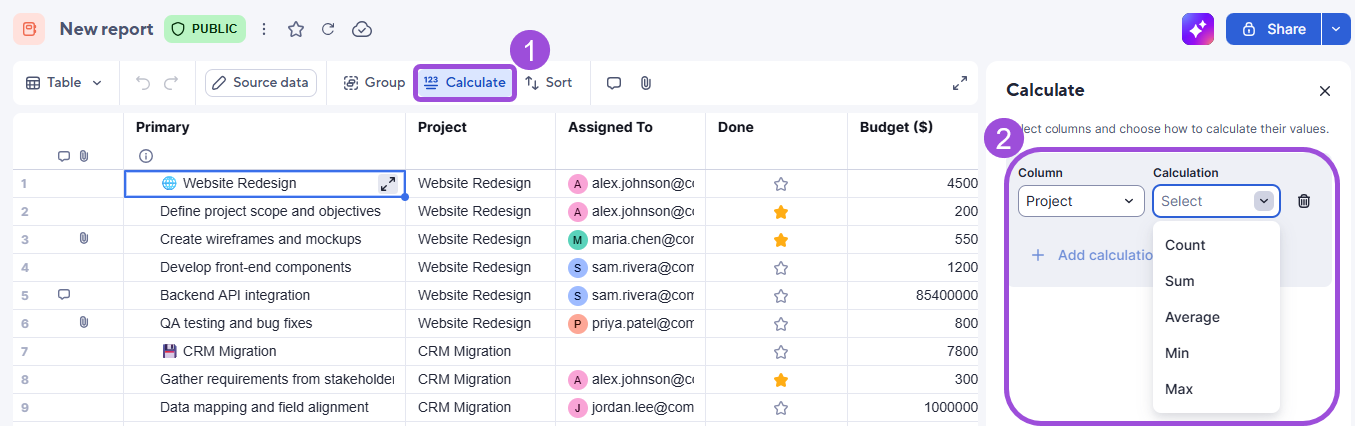
- Select Calculate in the toolbar at the top of the report.
In grid view, select Summarize to add calculations.
- In the panel, select a Column and Calculation from the drop-down menu. You can add multiple calculation summaries. Read more about summarizing data in reports.
Sort report data
To sort your column data in either ascending or descending order:
- In the toolbar, select Sort.
- In the sorting drawer, select Add a sort. You can add up to three levels of sorting.
- Select the column you want to sort by. You can control whether the sort is in ascending or descending order using the button next to the column name.
In grid view, toggle between Sort Oldest to Newest and Sort Newest to Oldest for ascending or descending order. Learn more about sorting in reports.