Apply a date format that can be interpreted consistently by everyone on your team, regardless of the Regional Settings in their accounts.
USM Content
Depending on locale, you might read a numerically formatted date in a different order from colleagues, for example: MM/DD/YY versus DD/MM/YY.
Date formatting options only apply to Date type columns and can be set up by Owners, Admins, or Editors.
Apply a format to the whole column
In your sheet:
- Select the date column header at the top to select the entire column.
Select the Date Format in the toolbar.
Brandfolder Image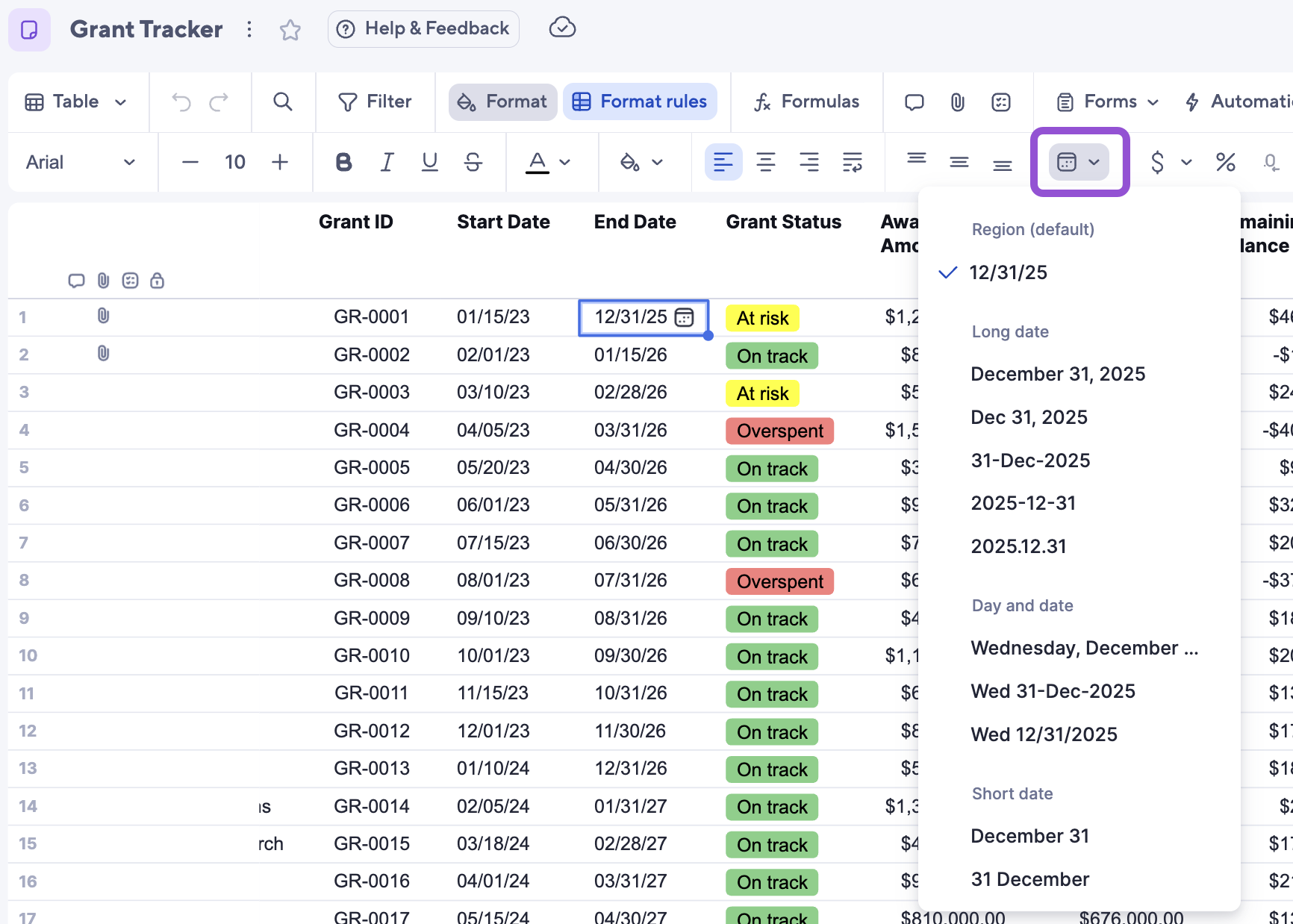
In Table view, the Format dates (Calendar) icon appears in the toolbar. In Grid view, use the three-dot menu to find the Date Format (Calendar) icon.
- Select the desired date format.
Applying a date format ensures consistency across current and future dates in the Date column.
Date formats
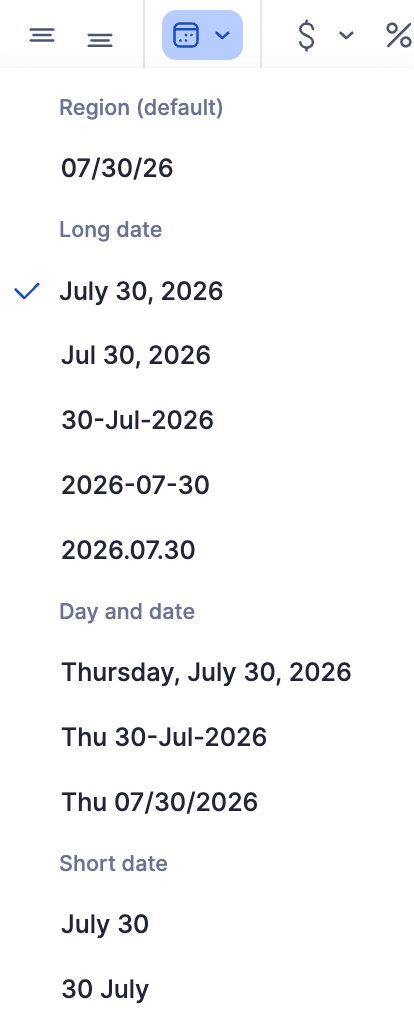
Select from a variety of date formats to suit your needs.
- Use long date formats, such as July 30, 2026; 30-Jul-2026; or 07/30/2026.
- Use day and date formats, such as Thursday, July 30, 2026 or Thu 30-Jul-2026.
- Use short dates, such as July 30 or 30 July.
Apply to specific cells
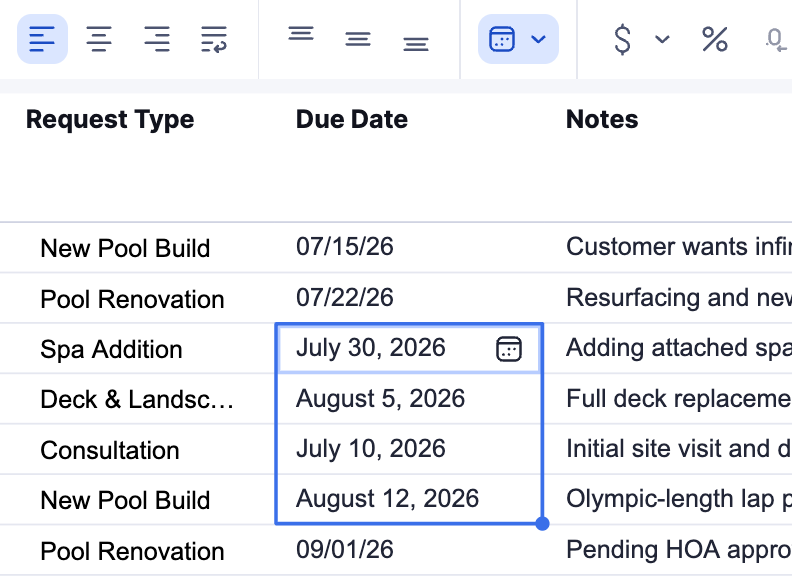
Select an individual cell or a group of cells to apply a specific date format.
When you apply formatting to a group of cells, anything else added to other cells in your Date column follows the column formatting.
How date formats appear
When you apply a different date format to a column, it appears standardized to everyone shared to the sheet. Depending on your Regional Settings, months and days of long-form date formats also appear localized in the following languages:
- English
- Spanish
- German
- Italian
- Portuguese
- Russian
- Japanese
Standardized date formatting doesn't apply to automated workflows.