Use customized or pre-made templates to ensure consistency in column names, types, and formatting. This standardization simplifies creating rollup reports and dashboards across multiple sheets.
USM Content
Saving a sheet as a template, like a project plan, can help you save time on your next project and maintain consistency across column names, column types, conditional formatting rules, and other sheet elements. Maintaining consistency makes it easy to add reports and dashboards to your solution.
If you’re looking to jump-start your next solution, search for inspiration, or learn from best practices, create from a Template in the Template Gallery. Templates are pre-built with sheet, form, automation, report, and dashboard capabilities, making it easy to personalize and share a powerful solution for your use case.
If you need help getting started, consider working with our Solution Services team. They can assess your situation and design a solution specifically for your needs.
Create solutions with templates
Use available templates to jump-start your solutions with pre-built sheets, forms, and dashboards designed around best practices.
These templates are fully customizable, allowing you to edit data, change column types, and add attachments to fit your specific needs.
- Select the +Create button on the left navigation bar. Then select More options > View all templates to browse available solutions.
- Templates function like regular sheets. Rename them or modify any element once you've created them.
Create your template
You can create a template from any existing sheet. Columns and conditional formatting rules are always saved to the template. You can also include notification settings, specific data, and formatting options such as row data, manual formatting, attachments, discussions, and forms.
- Open the sheet you'd like to save as a template.
- Select File > Save as Template to open the Save as Template window.
- Enter a name for your template and select where to save it.
- Open the Automated Workflow & Alert Options section and select whether to include Automated Workflows & Alerts and whether workflows that copy or move rows should reverse the destination.
- Choose Data & Formatting Options to specify which options you want to save with your template.
To retain column names and types only, uncheck Sheet data and formatting. - Select Save.
Your created templates are private. To modify a template, update the source sheet and save it as a new template. Remember that automated workflows exclude specific email addresses; re-enter them in new sheets derived from the template.
Use a template that you created
To create a new sheet from your template:
- .Select Browse on the navigation bar and choose the folder or workspace name in the left panel to locate your template.
- Select the template to see a preview appear.
- Choose the Use Template button in the window's lower-right corner to display the Use Template window.
- Name your sheet and decide whether to include all the features you originally saved (for example, data and formatting, attachments, discussions, and forms). You can save the sheet in a different folder or workspace.
- Select Save.
Share a template
You can’t share templates individually, but there are two ways for you to share them:
- Move them into a shared workspace. Anyone on the plan who is shared with the workspace and has Admin access can create new sheets.
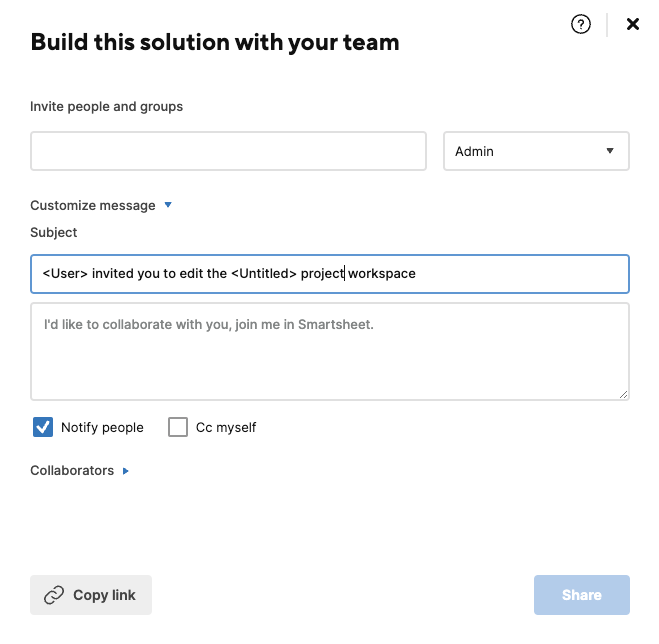
- When you create a new template from the template gallery, you can invite people to collaborate on it. Enter their email addresses, select their permission level, customize the invitation message, and then select the Share button.
If you’re on a Free or Trial plan, the sharing prompt automatically appears after downloading the template. Make sure to invite collaborators to help build the solution.
Your template is now available in either a new workspace or the one you selected for it.
Hover over the workspace name to edit it. Select the three dots, and then select Rename. Enter the new name and select Rename.